State Industrial Park Asset Seizure Protection Protocols for Foreign Equipment
Direct tripartite bailment covenants and perfected movable asset filings prevent industrial park authorities from converting foreign tooling into tenant distress collateral.


Custody
Foreign capital goods installed inside state-administered manufacturing enclaves occupy a precarious legal zone between sovereign concession rights and cross-border commercial claims. When a multinational enterprise deploys high-value surface-mount technology lines, computer numerical control machining centers, or continuous chemical reactors into a state industrial zone, local managers frequently assume that physical possession mirrors corporate ownership. Civil codes across many manufacturing jurisdictions establish a contrary statutory presumption: assets located on real property leased by a domestic operating entity belong prima facie to that domestic entity.
Industrial park management boards possess broad administrative authority under regional development acts to attach, freeze, or seal all movable assets within a tenant boundary whenever lease obligations, municipal utility fees, or tax assessments face default. Preserving proprietary rights demands strict legal separation of plant equipment from real property tenure from the initial date of importation.
Title separation functions through cross-border equipment bailment and operating leases executed by an offshore asset-holding vehicle. The entity leasing the industrial land plot cannot hold direct title to high-capital tooling if administrative seizure risk remains unhedged. Establishing an offshore equipment special purpose vehicle in an established commercial venue separates manufacturing operations from physical plant ownership.
The foreign entity leases or bails the machinery to the local manufacturing operating entity under formal, notarized bailment agreements that explicitly forbid sub-leasing, encumbrance, or accession to the realty.

Title Separation Principles
Operating leases structure ownership by retaining proprietary rights in an offshore special purpose vehicle rather than the local production company. Title never passes automatically. The bailment agreement defines the machinery as movable personal property, retaining this legal status regardless of whether technicians anchor the machinery into concrete foundations or wire it into dedicated high-voltage switchgear.
In civil law jurisdictions, equipment unbolted without structural damage to the plant building retains its character as movable property. Drafting the bailment contract requires an express clause stating that mechanical affixation represents an operational convenience and does not constitute civil law accession to the industrial land parcel.
Under Section 9-102 of the Uniform Commercial Code and parallel civil registration regimes, an unfiled equipment lease longer than one year converts into an unperfected security interest subordinate to park management attachments.
Clean bills forestall border detention. Perfecting this separation demands formal registration on domestic collateral and movable asset registries. In jurisdictions such as China, Mexico, and Vietnam, filing on the Credit Reference Center of the People’s Bank of China, the Registro Único de Garantías Mobiliarias, or the National Registration Agency for Secured Transactions establishes legal notice to third parties.
If a foreign investor skips this registration step, park authorities, local utility providers, and domestic liquidation committees acquire superior creditor rights over the equipment during distress events.

Bailment Structures under Special Concession Law
Delivery of industrial apparatus under a formal depositum contract transfers physical possession while expressly withholding proprietary rights from the tenant. Special economic zone concession agreements grant zone authorities extraordinary executive remedies to enforce master tenant covenants. When master developers default on state infrastructure bonds or regional environmental compliance decrees, zone operators routinely exercise administrative distraint across the entire park sector.
A foreign sub-tenant operating precision machinery inside that sector faces immediate facility lockouts, gate blockades, and utility cuts.
Bailment contracts sever land ownership. Enforcing this separation against a quasi-governmental park board requires a tripartite agreement executed between the foreign asset owner, the local manufacturing tenant, and the state industrial park development authority. Inside this tripartite covenant, the park development authority explicitly acknowledges that all serial-numbered machinery remains the exclusive, unencumbered property of the offshore lessor.
The park authority expressly waives any statutory landlord distraint, common law lien, or administrative retention right over the scheduled assets.
| Jurisdiction | Statutory Presumption of Ownership | Registry Filing Mechanism | Park Distress Rights | Judicial Resolution Window |
|---|---|---|---|---|
| China (National ETDZs) | Possession presumes tenant ownership | PBOC Credit Reference Center registration | Direct administrative seal under Park Regulations | 14 to 28 months |
| Vietnam (Industrial Parks / EPZs) | Presumed tenant asset if inside boundary | National Registration Agency for Secured Transactions | Management Board site detention orders | 12 to 24 months |
| Mexico (IMMEX Industrial Enclaves) | Civil accession presumption for anchored tools | Registro Único de Garantías Mobiliarias (RUG) | Fiscal distraint by SAT and municipal liens | 8 to 18 months |
| India (State Industrial Development Corps) | Presumed company property under Companies Act | Ministry of Corporate Affairs (CHG-1) and CERSAI | SIDC statutory re-entry and asset attachment | 18 to 36 months |
| Malaysia (Free Industrial Zones) | Chattel presumed under tenant possession | Companies Commission of Malaysia (e-Securities) | Port Authority or State Corp distress warrants | 9 to 15 months |
The tripartite instrument includes a direct covenant stating: The Industrial Park Development Corporation hereby disclaims all statutory, contractual, and administrative liens over the serial-numbered machinery listed in Schedule A and agrees that default by the operating tenant shall not impair the offshore lessor’s unhindered right to enter the premises and extract said machinery within twenty business days of formal notice.


Entry
Customs treatment at the territorial boundary dictates whether plant machinery remains classified as foreign merchandise or converts into domestic capital stock. State industrial parks, export processing zones, and bonded development corridors frequently offer tariff exemptions and deferred value-added tax upon importation of capital equipment. These fiscal incentives carry severe structural encumbrances.
When industrial machinery enters a bonded manufacturing zone under duty-suspension customs regimes, state customs administrations hold statutory liens over the goods until the operating enterprise fulfills export performance quotas, investment realization schedules, and continuous operational countdowns.
Landed machinery carries immediate valuation risk. The importing enterprise registers the capital equipment under specialized customs declarations that denote temporary admission for production purposes. In jurisdictions like China, registering apparatus under customs code 2225 or 2744 maintains bonded status under active supervision.
If the operating tenant defaults on local obligations or prematurely terminates park tenancy, customs authorities freeze the production line, reclassifying the equipment as illicitly diverted domestic goods. This administrative reclassification generates immediate liabilities for back tariffs, retroactive value-added tax assessments, and punitive non-compliance surcharges calculated against original invoice values.
Bonded Admittance and Customs Declarations
Declarations filed under customs relief codes establish temporary admission status for fabrication apparatus. Importers must preserve clear documentary evidence linking each chassis serial number to specific inward import declarations, certified packing lists, and manufacturer certificates of origin. Discrepancies between physical serial tags on robotic arms and numerical entries on customs clearance documents grant park inspectors immediate legal justification to seize the machinery pending formal administrative audit.
- Temporary import filing secures the duty-suspension status by lodging bonded customs entries against explicit foreign equipment lease agreements.
- Security bond execution guarantees customs duties through irrevocable commercial bank standbys, eliminating sovereign reliance on physical machinery retention.
- Serial number registration affixes certified import dossier declarations directly to each chassis, forestalling commingling allegations during municipal enforcement audits.
- Periodic inventory reconciliation updates the zone administration ledger biannually, ensuring customs registries match physical floor layouts exactly.
Secondary filings defeat administrative liens. The foreign asset owner maintains an independent customs bond through an international surety provider. This financial instrument insulates the production equipment from local tenant insolvency.
If the operating enterprise fails, customs authorities draw down on the independent cash collateral or surety bond rather than executing administrative distress against the physical tooling.
An independent surety bond filed with customs authorities releases physical production machinery from administrative impoundment within forty-eight hours of tenant insolvency.

How Severable Is Mechanical Tooling under Park Distress?
Physical integration with real property triggers civil law presumptions that accession annexes machinery to the underlying industrial parcel. State park boards exploit this civil doctrine whenever a tenant defaults on facility leases. In civil litigation, park management teams argue that heavy equipment anchored with chemical epoxy bolts, embedded into structural plinths, or integrated into centralized pneumatic supply lines has lost its independent identity as personal chattel.
The machinery converts into an immovable fixture belonging to the park owner.
The engineering design of equipment foundations determines subsequent legal outcomes. Industrial engineers must deploy modular steel skid mounts, vibration isolation pads, and mechanical anchor assemblies that detach without structural damage to floor slabs. Technical drawings stamped by licensed structural engineers must accompany the initial installation dossier, certifying that all production assets remain fully severable mechanical assemblies.
The dry lease preserves title. Attaching photographic and mechanical engineering certifications to the initial lease agreement establishes verifiable proof of severability before disputes arise.
Omission of the severability certification leaves the machinery exposed to civil court attachments that freeze corporate assets for thirty-six months while local appraisers debate fixture accession.


Gate
Physical containment mechanisms determine asset control the moment a zone administration issues an enforcement order. Industrial park boundaries operate under armed perimeter security, automated vehicle barriers, and biometric access points controlled by park management boards. During operational distress, the administrative committee seals the gate against outbound freight.
Production managers find themselves physically barred from entering the factory floor. Rigging crews, foreign technicians, and transport haulers face immediate detention or expulsion if they attempt to retrieve unbolted machinery without executive gate passes.
Physical access controls dictate asset survival. Legal title remains useless if park guards deny heavy rigging contractors entry to the loading bays. Securing equipment against extra-legal physical sequestration demands both contractual access protocols and autonomous mechanical countermeasures installed directly on the machinery chassis.

Perimeter Hardening and Mechanical Lockout
Securing production modules against unauthorized displacement demands dual-key physical restraints and tamper-evident barrier seals. Highly specialized tooling requires mechanical immobilizers that prevent unauthorized operation or disassembly by park personnel. Industrial parks frequently attempt to run seized equipment using replacement contract labor or domestic competitor joint ventures.
Preventing illicit production runs demands hardware-level mechanical interlocks.
- Chassis anchor plates bolt equipment bases to foundation skids using coded security fasteners that resist conventional hydraulic extraction tools.
- Electronic control isolation locks internal bus architectures behind encrypted physical housing covers, preventing unauthorized rewiring or local maintenance bypasses.
- Barcode security seals evidence tamper events along primary cabinet seams, invalidating domestic operating permits if unauthorized personnel breach internal compartments.
- Pneumatic fluid discharge empties proprietary hydraulic circuits upon emergency shutdown, rendering complex forming presses inoperable without proprietary vendor recalibration fluids.
Physical security tags riveted to machinery chassis defeat good-faith buyer defenses during unauthorized park liquidation auctions.
The physical serial plates govern ownership. Foreign asset owners must rivet polished stainless steel or anodized aluminum identification plates to each machine module. These plates state in both the local language and English that the equipment remains the unencumbered property of the offshore leasing company, citing registry filing numbers, bailment dates, and asset tracking references.
These permanent plates destroy any subsequent claims by third parties that they purchased the machinery in good faith from an ostensibly solvent domestic manufacturer.
Telemetric Verification and Remote Disablement
Cellular and satellite location transponders mounted within main chassis frames broadcast positional coordinates independently of municipal power grids. Precision production lines must incorporate autonomous telemetric tracking modules connected to global cellular constellations. These transponders operate on independent lithium iron phosphate battery reserves capable of transmitting beacon signals for up to ninety days following main facility power disconnection.
Power disconnection accelerates corrosion. If park security personnel sever external utility lines to enforce a lockout, the transponder alerts the offshore asset security center within minutes.
Modern machine tool programmable logic controllers allow programmable firmware lockouts executed over encrypted satellite or cellular uplinks. Upon formal declaration of tenant insolvency or illegal asset seizure, engineering directors send cryptographic kill commands directly to the core controller firmware. The controller overwrites its non-volatile memory, wipes custom operating parameters, and engages absolute electronic lockouts on multi-axis drives.
Seized equipment instantly converts into an inert, non-functional assembly of structural steel and alloy castings, eliminating any commercial incentive for park administrators to retain physical custody.
Park guards invariably claim that regional development statutes empower local security detachments to halt all vehicular egress during administrative audits.

Compact
International investment protection structures establish recourse against sovereign measures that impair foreign commercial assets. State-owned industrial parks, municipal development authorities, and provincial special economic zones function as sovereign instrumentalities of the host state. Under public international law, administrative asset seizures, arbitrary lease cancellations, and discriminatory park blockades executed by state-controlled park boards constitute indirect expropriation or measures tantamount to expropriation.
Investors structure equipment ownership through intermediary jurisdictions holding Bilateral Investment Treaties with the host nation.
Holding equipment title through holding companies established in treaty-partner jurisdictions unlocks investor-state dispute settlement rights under the International Centre for Settlement of Investment Disputes or United Nations Commission on International Trade Law arbitration frameworks. Local municipal courts often show deference to regional political figures and state park operators. International arbitration bypasses municipal judicial hierarchies, placing substantial financial pressure on central governments to compel park authorities to release detained manufacturing assets.

Bilateral Investment Treaties and Direct Expropriation
Direct takings of foreign capital apparatus activate compensatory rights under intergovernmental conventions. When an industrial park development authority padlocks a plant, detains foreign machinery, and threatens public auction under municipal debt collection regulations, the act violates standard treaty guarantees regarding fair and equitable treatment, full protection and security, and arbitrary or discriminatory impairment. The state cannot escape international liability by hiding behind the separate corporate personality of a municipal park operating authority.
BIT tribunals examine whether the asset detention constitutes legitimate regulatory enforcement or creeping expropriation designed to extract financial settlements from foreign investors. To build an unassailable international claim, the foreign investor must construct a meticulous administrative record. Every demand for access, every formal tender of lease payment, and every unlawful denial issued by park security must be contemporaneously notarized and registered through diplomatic or consular channels.
A standard BIT clause prohibiting unlawful expropriation renders municipal park asset seizures subject to international arbitral restitution orders.
Sovereign Immunity Waivers in Park Leases
State industrial corporations regularly execute operational contracts through arms-length statutory entities that disclaim administrative privileges. When foreign enterprises negotiate land occupancy, utility connection, and park operation agreements with state-owned development authorities, the standard documentation contains expansive sovereign immunity and public interest reservations. Park administrators routinely assert statutory administrative immunity when foreign equipment owners file emergent replevin or injunction lawsuits in domestic commercial courts.
Eliminating this procedural shield requires explicit contractual waivers of sovereign, administrative, and crown immunity. The lease and park covenants must contain comprehensive waivers covering pre-judgment attachment, judicial execution, and administrative distress against foreign-owned assets. The waiver must explicitly stipulate that the park developer acts solely in a commercial capacity under private law, submitting fully to commercial arbitration regimes.
| Treaty Instrument | Investor Recourse | Exhaustion Requirement | Arbitral Timeline | Historical Recovery Yield |
|---|---|---|---|---|
| ICSID Convention | Direct investor-state claim against sovereign | No local exhaustion required unless specified | 36 to 48 months | 78 percent of market valuation |
| UNCITRAL Ad Hoc | Flexible procedural seat selection | Rarely mandated by modern treaties | 24 to 36 months | 65 percent of market valuation |
| ICC International Court | Commercial claims under lease contracts | Contractual dispute resolution only | 18 to 24 months | 85 percent of contracted claims |
| Domestic Administrative Courts | Direct injunction against park management | Immediate domestic filing required | 12 to 36 months | 22 percent of asset value retained |
Whether bilateral treaty protections remain practically enforceable before physical corrosion degrades high-precision machinery during protracted international arbitral proceedings remains an open tactical question.


Lien
Unpaid utility assessments, land concessions, and municipal development surcharges trigger administrative attachment procedures against on-site machinery. State industrial parks hold statutory distress rights under specialized enabling acts that grant park managers extraordinary powers akin to tax collectors. When a factory encounters liquidity constraints, park managers prioritize their own operating receivables over commercial unsecured creditors.
They draft an internal distraint warrant, arrive at the facility accompanied by municipal enforcement officers, and place administrative seals across the machinery cabinets.
State concessionaires hold statutory distress rights. These administrative actions proceed without prior judicial hearings. The park authority treats everything inside the plant boundary as tenant collateral, ignoring unregistered leases or foreign ownership certificates.
Breaking an administrative attachment requires proving that statutory distress remedies cannot attach to third-party goods that never entered the legal estate of the delinquent tenant.
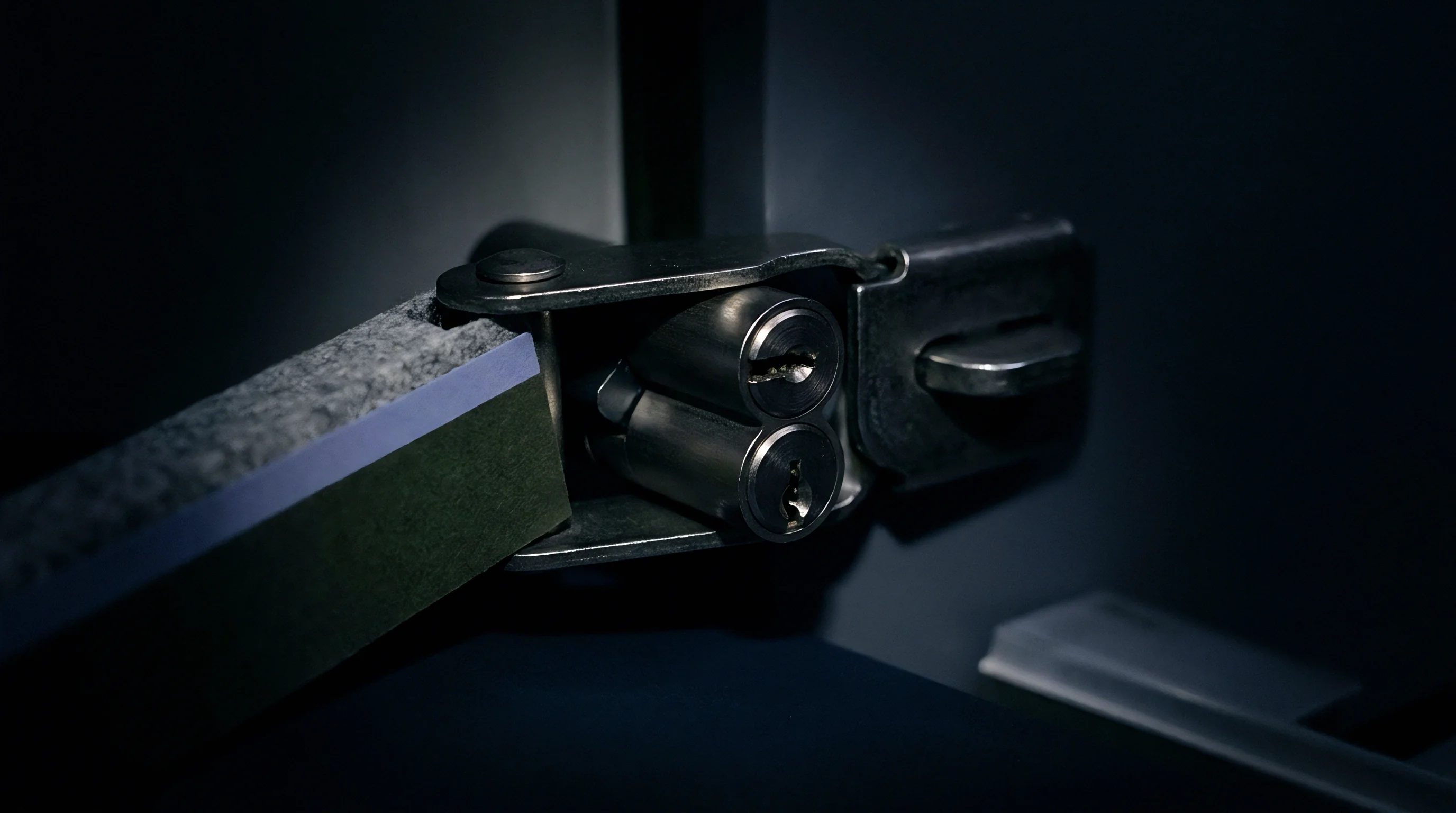
Statutory Distraint and Concession Default Sequences
Industrial park administrators initiate property seizures through internal executive orders rather than conventional civil court filings. The administrative process follows a rigid, accelerated trajectory designed to force rapid financial settlement. Understanding this procedural cadence allows foreign asset owners to intervene before the park authority executes irreversible physical liquidation auctions.
- Notice of assessment default issues fifteen days prior to physical attachment, detailing outstanding park maintenance fees, effluent treatment surcharges, and land rent arrears.
- Administrative distraint order authorizes zone security officers to padlocks main factory gates and sever secondary industrial power supplies.
- Chattel inventory compilation records all visible mechanical assets without verifying serial plates against national movable property collateral registries.
- Public liquidation notice posts twenty business days following physical seizure, advertising public auction of factory equipment to satisfy local administrative debts.
Local courts defer to park administrators. When an administrative attachment occurs, the foreign asset owner must immediately file an emergency third-party claim of property with the competent municipal intermediate court or commercial bench. This filing must be supported by the certified bailment contract, registered movable asset filings, proof of non-accession, and export-import declarations.

Whose Security Filing Establishes Repossession Priority?
Perfected interests recorded on central movable asset registries defeat unrecorded administrative charges when disputes reach commercial benches. In any industrial distress scenario, multiple claimants compete for remaining physical value: the state industrial park board claiming unpaid rent, local tax authorities asserting sovereign tax liens, secured lenders holding floating debentures over inventory, and the foreign equipment lessor holding title to the machinery.
Arbitral awards require judicial execution orders. Priority disputes turn entirely on registration timestamps and statutory perfection rules. Under modern secured transactions regimes, a perfected purchase money security interest or a recorded true equipment lease outranks floating debentures and subsequent administrative distraint attachments.
If the foreign lessor recorded its interest on the central movable collateral registry prior to the date the park authority issued its distraint warrant, commercial courts order the immediate dissolution of the administrative seal.
| Asset Valuation Band | Holding and Storage Fees | Legal Retainers and Court Costs | Equipment Impairment Loss | Total Capital at Risk |
|---|---|---|---|---|
| 1,000,000 USD CNC Cell | 45,000 USD (6 months) | 60,000 USD | 120,000 USD (corrosion / obsolescence) | 225,000 USD |
| 5,000,000 USD SMT Line | 110,000 USD (6 months) | 125,000 USD | 750,000 USD (calibration drift / decay) | 985,000 USD |
| 15,000,000 USD Cleanroom Fab | 280,000 USD (6 months) | 250,000 USD | 3,200,000 USD (membrane failure / air loss) | 3,730,000 USD |
| Assumes a six-month recovery timeline under contested administrative distraint with climate-control utilities severed by park operators. | ||||
The owner who documents every serial number across both customs records and national collateral registries reclaims machinery while competing creditors litigate empty shells.


Extraction
Moving heavy capital apparatus across park borders demands strict synchronization between customs cancellation permits and heavy rigging logistics. Once an administrative release order or judicial replevin decree issues, the operational window to extract production assets is exceptionally narrow. Park authorities frequently attempt re-attachment under revised administrative theories, asserting previously unbilled ecological remediation surcharges, industrial wastewater decommissioning penalties, or municipal facility restoration fees.
The equipment leaves under bond. Successful extraction requires mobilizing heavy transport assets within hours of obtaining administrative clearance. Industrial rigging contractors must stage specialized hydraulic gantries, air-bearing load modules, and lowboy transport trailers outside the park perimeter while legal teams finalize gate passes.
Any delay gives local creditors opportunities to file secondary attachment actions in local courts.

Carnet Mechanisms and Outward Customs Clearance
Standard international customs documents facilitate the temporary relocation of production lines without triggering immediate tariff liabilities. Operating under an ATA Carnet or specialized outward customs clearance permits allows machinery to cross host-state borders without assessing export duties or value-added tax adjustments. Customs officers must conduct export verification at the factory bay rather than at international freight terminals, sealing cargo containers before trucks traverse municipal roads.
Rigging crews require advance security clearances. The export clearance protocol demands comprehensive mechanical inventories matching the original inward declarations. Customs officials verify machine serial numbers, motor ratings, and chassis configurations against initial import dossiers.
Any physical modification, retrofitted motor, or replacement drive unit lacking customs approval generates immediate export detention, forcing the machinery back into state-controlled holding warehouses.

Emergency Repatriation and Cross Border Removal
Physical decanting of precision machinery demands certified crane operators, structural riggers, and flatbed transport secured forty-eight hours before boundary seals close. Dismantling industrial machinery under distress requires maintaining precision climate control and nitrogen-purged shipping enclosures. When cleanroom fabrication modules or high-precision optical aligners sit in unpowered factory bays, atmospheric humidity and ambient particulates destroy sub-micron tolerances within days.
Heavy transport convoys must operate under bonded transport manifests, accompanied by licensed customs brokers and private security escorts authorized to navigate municipal police checkpoints. The extraction plan routes freight directly to international container vessels or bonded air cargo facilities, avoiding intermediate storage warehouses inside regional industrial zones. Crossing the territorial boundary terminates state park authority jurisdiction, extinguishing all surviving statutory lien risks.