Physical Custody Rules for Chops in Foreign Joint Ventures
Physical chops legally bind joint ventures to third parties, requiring split dual-custody safes, smart vaults, and articles specifying execution limits.


Hierarchy
Articles of association in a Sino-foreign joint venture remain subordinate to the physical stamp pressed upon paper. When a local counterparty presents an inked contract bearing the circular red emblem of the enterprise, Chinese courts and commercial banks treat that instrument as a binding commitment of the legal entity. Article 61 of the PRC Civil Code grants the legal representative the power to act on behalf of the juristic person, yet commercial reality vests absolute external authority in the official seals, known as chops.
The board of directors may resolve unanimously to terminate a supply line, prohibit debt creation, or strip an officer of procurement rights. If that officer walks into a branch of the Industrial and Commercial Bank of China carrying the company chop and the financial chop, the bank honors the withdrawal. The ink overrides the minute book.
Foreign joint ventures operate under five distinct instruments of physical execution, each governing a separate commercial perimeter. Partitioning these instruments prevents systemic administrative capture by any single operating faction.
- Official Company Chop carries universal executive power across all corporate acts, regulatory filings, and third-party contracts. Affixing this circular stamp binds the enterprise regardless of internal shareholder agreements or missing board resolutions.
- Legal Representative Personal Chop validates statutory decisions, bank signatory registrations, and registry amendment documents. Local administrative agencies treat this carved name stamp as the individual officer’s direct personal execution.
- Financial Chop controls treasury movements, commercial paper endorsements, tax disbursements, and account closures. Banking mandates mandate this seal alongside the legal representative chop to release outbound corporate remittances.
- Contract Chop ratifies commercial agreements, sales orders, vendor procurement schedules, and lease documentation. Operating units rely on this seal to execute day-to-day trade engagements without accessing the primary corporate seal.
- Electronic Company Chop generates cryptographically anchored impressions on government platforms, digital tax portals, and public tender exchanges. Administrative control over the corresponding USB security tokens mirrors the legal exposure of physical custody.
The company seal binds the joint venture to third parties regardless of internal board voting thresholds.
Cross-border joint ventures routinely miscalculate the evidentiary weight of an unauthorized seal impression. Under prevailing Supreme People’s Court judicial interpretations concerning the PRC Company Law, third parties acting in good faith bear no obligation to investigate whether an affixed company seal complies with internal corporate governance covenants. A contract signed by a rogue general manager without board sanction remains enforceable against the company if stamped with the registered official seal.
The foreign investor faces the burden of proving that the counterparty possessed direct, affirmative knowledge of the signatory’s lack of authority. Proving bad faith in a local commercial court presents severe evidentiary hurdles. Judges prioritize transaction security over foreign shareholder protections.
| Seal Classification | Statutory Registration Body | Governing Instrument Scope | Operational Risk Level |
|---|---|---|---|
| Official Company Seal | Public Security Bureau, Market Regulation Bureau | Enterprise filings, statutory authorizations, institutional litigation | Catastrophic |
| Legal Representative Personal Seal | Commercial Banking System, Market Regulation Bureau | Treasury mandates, regulatory amendments, statutory powers of attorney | Severe |
| Financial Chop | Commercial Account Opening Bank, Tax Bureau | Cash disbursements, tax documentation, foreign exchange settlement | Critical |
| Contract Chop | Public Security Bureau Recordal | Commercial supply contracts, procurement orders, logistics documentation | Moderate |
| Customs Chop | General Administration of Customs | Import declaration bills, bonded warehouse permits, clearance manifests | Localized |
Foreign partners frequently discover that the local founder views the physical seals as proprietary property. Possession reflects sovereignty. The party holding the carved stone exercises undisputed management de facto.
Safe custody demands formal structural separation.

Vault
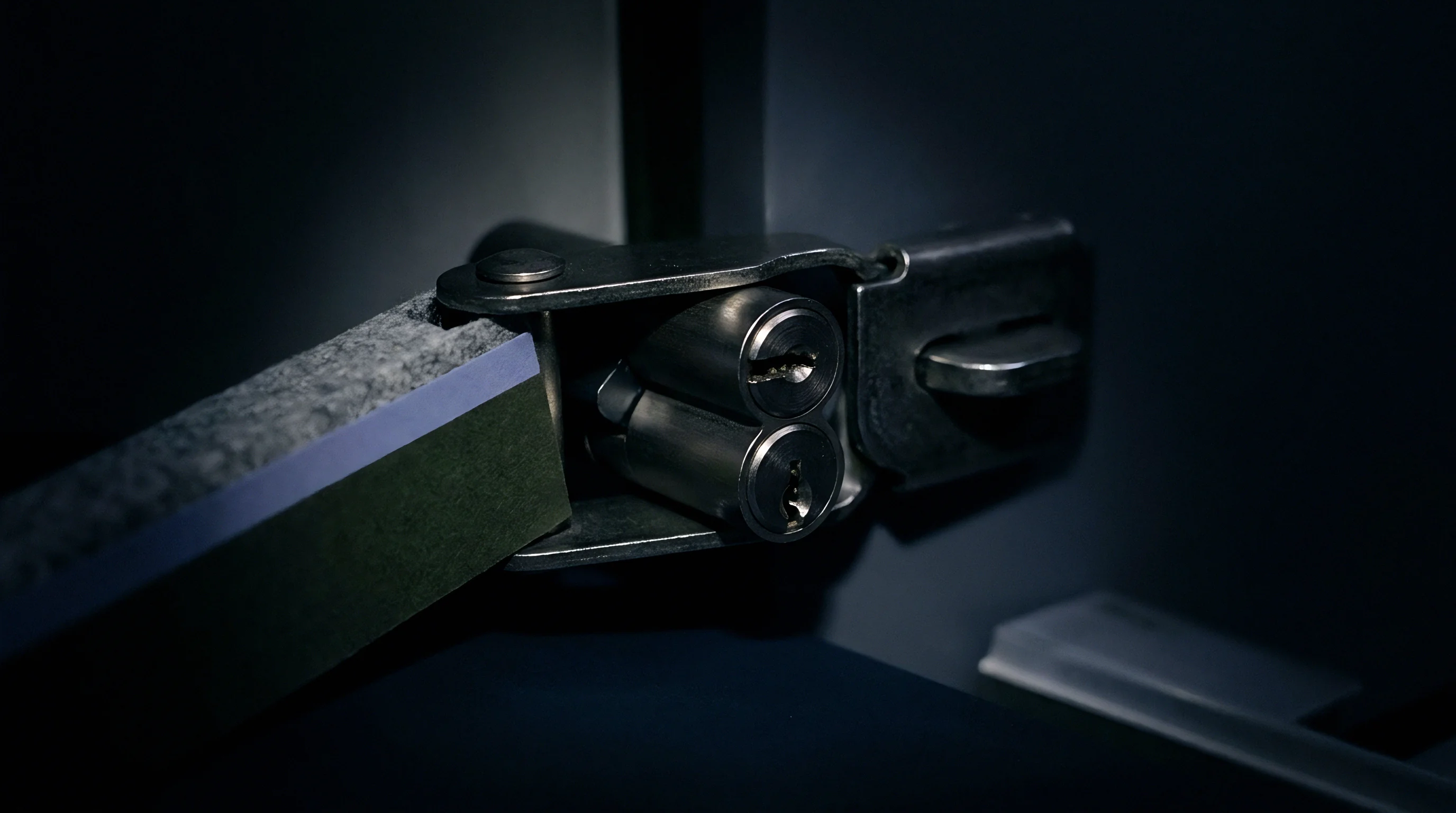
Physical security begins with dual-key containment hardware installed outside the operational control of the general manager. Storing corporate chops inside an executive desk drawer invites unilateral deployment during contractual disputes. Joint venture facilities require a commercial dual-custody safe equipped with two distinct locking mechanisms, where access demands the physical presence of two independent keyholders.
One key remains in the possession of the foreign shareholder designee, often the finance director. The secondary mechanical key or biometric registration belongs to the Chinese partner’s operational appointee. Opening the vault requires concurrent mechanical engagement.
Modern ventures install connected smart containment boxes to eliminate physical transit risks. Electronic chop vaults enclose each stamp inside an automated mechanical carousel equipped with optical sensors, micro-cameras, and network interfaces. An operator seeking to execute a document inserts the paper into an exposure aperture beneath a tempered glass viewing port.
- Document Submission initiates when the local operating clerk uploads a complete digital copy of the unexecuted instrument to the cloud governance interface. The workflow tags the submission with transactional counterparty data and payment terms.
- Remote Authorization alerts the foreign shareholder’s designated legal officer to review the uploaded text against approved board schedules and procurement limits. Approval releases a single-use digital authorization token valid for fifteen minutes.
- Optical Alignment engages micro-cameras inside the vault chamber to capture high-resolution imagery of the physical document resting on the stamp bed. Automated software matches the physical page layout against the pre-approved PDF document to verify text identity.
- Mechanical Impression actuates a robotic plunger to depress the designated chop onto the contract surface without permitting manual handling of the seal body. The mechanism records ink contact duration and displacement pressure.
- Audit Logging transmits high-resolution scans of the stamped execution page directly to offshore corporate servers while archiving user credentials, timestamp data, and geolocation records. The physical safe door stays locked throughout the sequence.
A dual-custody safe agreement prevents unilateral dispatch by requiring concurrent biometric authorization from both shareholder designees.
Hardware failures happen. Electronic vaults depend on external network stability and uncorrupted firmware. In factory environments located in secondary industrial zones, electrical interruptions freeze mechanical chop carousels mid-cycle.
The joint venture agreement needs clear fallback mechanisms. A foreign investor relying exclusively on a remote electronic vault must maintain an emergency mechanical retrieval procedure requiring both parties to present physical brass keys at the physical vault site.
| Custody Architecture | Execution Latency | Registry Defensibility | Tamper Resistance | Capital Expense |
|---|---|---|---|---|
| Single Officer Manual Possession | Immediate | Extremely Vulnerable | Negligible | Zero |
| Dual-Key Mechanical Safe | 2 to 4 Hours | Moderate | High | Low |
| Split Custody Physical Model | 4 to 8 Hours | High | Substantial | Moderate |
| Automated Optical Smart Vault | 10 to 20 Minutes | Very High | Near Absolute | Substantial |
| Independent Third-Party Escrow | 24 to 48 Hours | Complete | Absolute | High Ongoing |
The joint venture contract specifies that any use of the company seal without pre-recorded electronic authorization constitutes material breach, terminating operational delegations and triggering automatic indemnification obligations across the holding structure.


Mandate
Drafting custody covenants inside the articles of association demands structural precision. Internal administrative guidelines, operating manuals, and management contracts possess zero standing against external bona fide counterparties. Protection requires embedding custody rules directly into the statutory articles filed with the local Administration for Market Regulation.
When custody terms appear inside the public corporate charter, third parties face imputed constructive notice of execution limitations.

Where Do Registry Officials Verify Affixed Impressions?
Local registration bureaus examine chop impressions against specimens filed during enterprise formation. The Public Security Bureau seal recordal system maintains high-resolution carving proofs showing micro-grooves, letter spacing, and specific typographic faults intentionally cut into the seal face. During corporate amendments, share transfers, or regulatory licensing events, the administrative officer manually inspects submitted instruments against the archived specimen card.
If the physical stamp deviates in border width by half a millimeter, the clerk rejects the corporate filing. Registry officials verify physical seals against official government databases, yet they do not audit whether internal custody protocols were respected before the stamp was pressed onto the paper.
Possession of the physical seal establishes immediate operational control over the local enterprise.
Partitioning custody across corporate roles prevents single-party governance seizure. The most defensive corporate design separates the legal representative personal chop from the physical company seal. The foreign shareholder appoints the legal representative, holding that officer’s personal seal in an offshore corporate secretarial office in Hong Kong or Singapore.
The local Chinese partner retains day-to-day administrative custody of the contract seal at the operating headquarters. The financial seal rests with a third-party accounting firm or inside a dual-custody safe box. Under this architecture, creating unapproved commercial commitments requires cross-party collusion.
Operating units often resist strict custody rules by arguing that commercial counterparties will refuse to wait for multi-step approval sequences during routine trade procurement.

Impasse
When partners fight, physical custody turns into an outright physical contest. A recalcitrant general manager facing imminent dismissal routinely seizes the seals, removes them from the company premises, and hides them in a private residence. Corporate operations stall instantly.
The joint venture cannot sign lease extensions, clear incoming sea freight through customs, issue statutory value-added tax invoices, or disburse payroll through domestic accounts. The board possesses the votes to remove the executive, but lacks the physical instruments required to execute the corporate change registration at the Market Regulation Bureau.
Administrative resolution paths inside the Chinese regulatory bureaucracy move slowly. Recovering operational authority requires running an intricate legal sequence across commercial registries and police departments.
- Corporate Resolution Formalization demands convening an extraordinary board or shareholder meeting strictly compliant with notice periods set forth in the statutory articles. The minutes must record the explicit revocation of the manager’s custody mandate and cancel all outstanding powers of attorney.
- Public Security Bureau Notice involves filing an official criminal complaint alleging unlawful detention of corporate property or misappropriation of administrative instruments. Local police forces frequently decline intervention, characterizing the dispute as an internal civil shareholder disagreement.
- Provincial Newspaper Declaration requires publishing a formal announcement in a designated provincial-level circulation newspaper declaring the physical chops lost, invalid, and void. The notice alerts commercial markets that impressions dated after the publication date carry no corporate authority.
- Chop Re-carving Application proceeds before the Market Regulation Bureau and Public Security Bureau to obtain fresh carving approval permits. Bureau clerks demand the original business license, which the rogue manager often holds alongside the physical stamps.
Replacement filings for lost enterprise seals average eighty-two days before local market regulators accept counterparty representations.
The enterprise risks insolvency while administrative proceedings crawl through local bureaus. Lenders freeze credit facilities upon receiving notice of competing internal authorities. Suppliers suspend shipments when invoices arrive unstamped.
A joint venture caught in seal litigation loses commercial viability long before a people’s court issues an enforcement writ for property restitution.

Audit
Verification protocols preserve the integrity of physical custody systems over multi-year investment horizons. Custodial audits must verify physical chop presence, inspect physical wear patterns, and reconcile execution logs against verified accounting ledger entries. An auditor conducts physical seal inspections by pressing the stamps onto specialized forensic registration sheets.
This process maps surface micro-fractures, edge chipping, and carving irregularities against baseline specimens archived during company establishment.
Whose Signature Overrules an Unregistered Seal?
Under Article 490 of the PRC Civil Code, a commercial contract becomes effective upon signature or seal affixation by the contracting parties. If an agreement carries the genuine signature of the statutory legal representative but lacks an affixed company seal, the document legally binds the enterprise unless the contract explicitly conditions validity upon concurrent stamping. Conversely, if a contract bears an unregistered departmental stamp accompanied by the signature of an authorized corporate officer possessing a valid power of attorney, courts enforce the underlying obligation.
The signature of the duly registered legal representative overrules the absence of an official seal in commercial litigation, creating a crucial legal counterweight for foreign investors controlling the statutory representative post.
| Municipal Administrative Zone | Police Dispute Classification | Registry Carving License Timeline | Court Injunction Availability |
|---|---|---|---|
| Shanghai Pudong New Area | Civil Impasse (90% Rejected) | 45 to 65 Days | Rare (Pre-litigation bond required) |
| Beijing Chaoyang District | Civil Impasse (95% Rejected) | 60 to 90 Days | Very Rare |
| Shenzhen Qianhai Cooperation Zone | Civil Impasse (85% Rejected) | 30 to 50 Days | Occasional (Commercial chamber review) |
| Suzhou Industrial Park | Civil Impasse (80% Rejected) | 40 to 60 Days | Extremely Rare |
Physical inspections uncover illicit duplication. Carving counterfeit chops remains widespread despite severe penal code sanctions. Local rogue operators use laser engraving technology to replicate genuine seal impressions lifted from scanned commercial invoices.
Auditors verify chop authenticity by microscopic inspection of the relief base material, verifying whether the corporate stamp exhibits the brass, organic glass, or composite synthetic resin recorded on the Public Security Bureau approval permit. Discrepancies in substrate density expose unauthorized secondary chops.
Unresolved questions persist regarding whether international commercial arbitration tribunals seated in Singapore or Geneva can effectively compel the physical surrender of corporate chops situated on mainland soil, given the strictly territorial jurisdiction of Chinese domestic enforcement courts.

Retrieval
Recovering hijacked corporate seals demands structured leverage across the venture’s holding chain. Where administrative cancellation paths stall, foreign investors utilize offshore parent control to starve the domestic entity of external capital and commercial licensing. The foreign shareholder halts intellectual property licensing transfers, terminates offshore supply chain procurement, and triggers loan default clauses in cross-border intercompany financing facilities.
Denying outbound cash distributions exerts direct financial pressure on the domestic operating partner holding the stamps.
Legal teams file parallel civil lawsuits seeking physical return of the company seal alongside statutory damages under the enterprise governance provisions of the 2024 PRC Company Law. Article 51 of the revised statute imposes strict fiduciary duties on operating directors and executive managers regarding enterprise property preservation. The foreign shareholder drafts the civil complaint directly against the rogue individual rather than against the joint venture entity, attaching the individual’s personal assets as security for operational losses caused by unauthorized seal detention.
Execution of a civil court judgment ordering chop surrender requires enforcement officers from the local basic people’s court to visit the operational facility in person. The court clerk demands the physical opening of the safe or issues a formal judicial directive to the Market Regulation Bureau ordering administrative cancellation of the disputed seals. The registry invalidates the old recordal, issues a replacement business license, and authorizes the legal representative to carve a fresh company seal carrying a revised serial code.