Tooling and Intellectual Property Contributed as Equity Rather than Cash
Contributing tooling and IP as equity demands court-approved independent appraisals, clear title deeds, duty optimization, and precise asset return ladders.
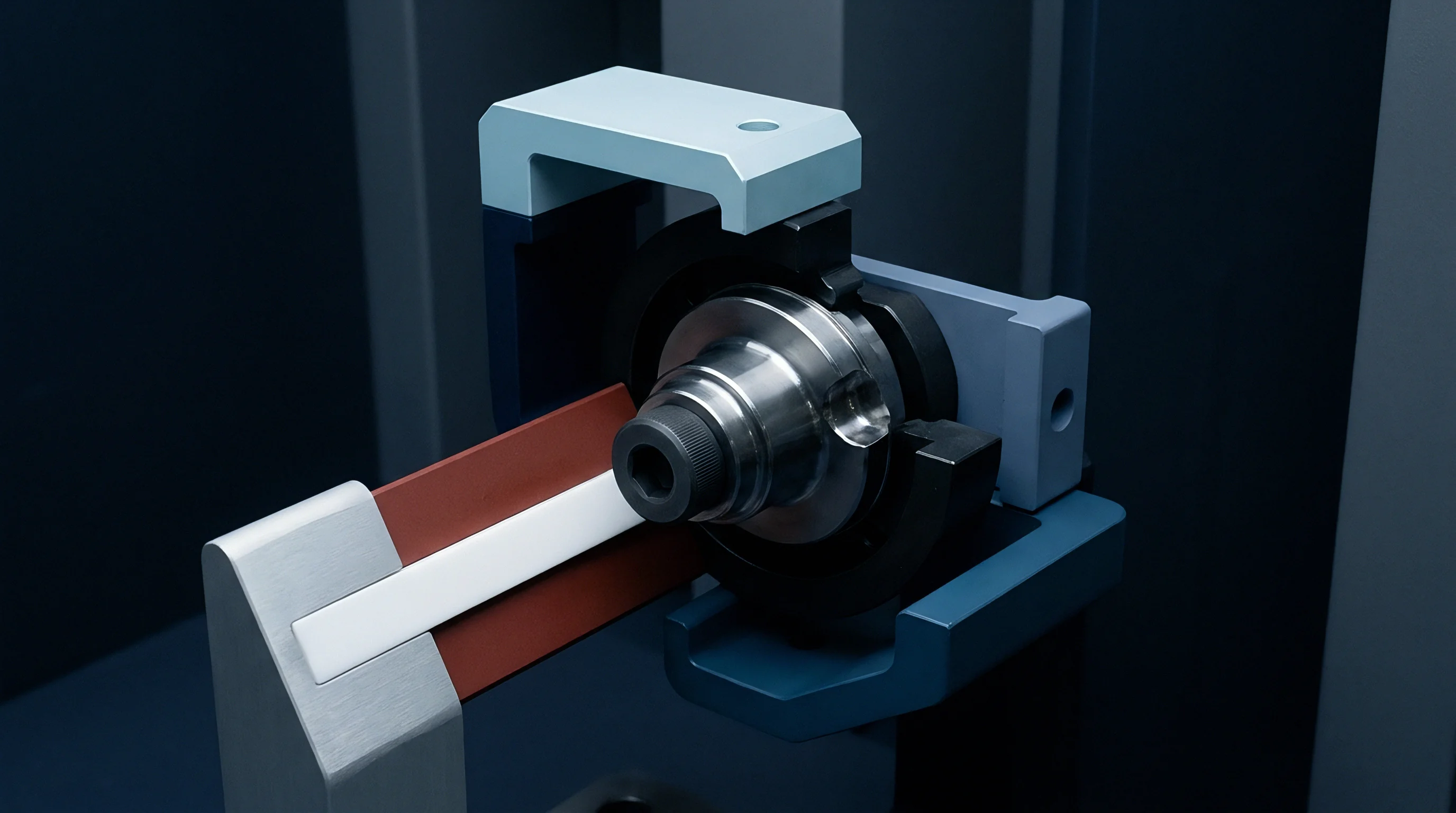

Mold
Contributing equipment or proprietary software to a new entity in exchange for shares converts operational assets into registered corporate equity. Founders and joint venture partners frequently use non-cash contributions to preserve cash reserves, commit specialized manufacturing equipment, or align cross-border operations. The legal validity of the contribution hinges on the statutory rules governing paid-in capital in the chosen jurisdiction.
While cash contributions carry explicit nominal values backed by bank transfers, in-kind contributions require clear legal classification, formal valuation, and strict compliance with capital maintenance rules to prevent shortfall liability for the contributing shareholder.
Statutory frameworks differ sharply in how they treat non-cash capital contributions. Common law jurisdictions like Delaware or the Cayman Islands give corporate directors broad discretion when valuing non-cash consideration. Under Section 152 of the Delaware General Corporation Law, the judgment of the board of directors as to the value of the consideration received for the issuance of stock is conclusive in the absence of actual fraud.
That flexibility lets parties set subjective values on custom tooling, experimental dies, or unpatented trade secrets without court oversight or mandatory independent appraisals. Risk shifts entirely to the contract level, requiring minority shareholders to rely on explicit representations, warranties, and adjustment mechanisms to guard against overvalued assets.
Civil law jurisdictions take a much stricter approach to protect corporate creditors. Under Section 5 of the German Limited Liability Companies Act, in-kind contributions must be declared in the articles of association and accompanied by a detailed valuation report. If the appraised tooling or software falls short of the nominal share value on the registration date, the contributing shareholder is personally liable in cash for the shortfall.
Article 48 of the revised PRC Company Law similarly requires non-cash contributions ~ including intellectual property, land use rights, and equipment ~ to undergo formal asset valuation and verification by certified accounting firms before the State Administration for Market Regulation will register the equity.
| Jurisdiction | Statutory Authority | Mandatory Valuation Requirement | Creditor Protection & Shortfall Liability | Registry Filing Proof |
|---|---|---|---|---|
| Delaware (US) | DGCL § 152 / § 153 | No; board judgment conclusive absent fraud | Low statutory liability; bound by contractual breach claims | Form BS-1 stock issuance minutes |
| United Kingdom | Companies Act 2006 § 593 | Yes for public limited companies; no for private limited companies | Directors liable under breach of duty if valuation lacks reasonable basis | Companies House Form SH01 |
| Germany | GmbHG § 5 / § 19 | Yes; mandatory independent auditor valuation report | Strict personal cash liability for shortfall on registration date | Handelsregister Sachgründungsbericht |
| Singapore | Companies Act 1967 § 68 | No; board resolution supported by director valuation declaration | Directors criminally liable for false solvency or valuation declarations | ACRA Return of Allotment of Shares |
| China (PRC) | PRC Company Law Art. 48 | Yes; certified asset appraisal report required prior to registration | Joint and several liability among founding shareholders for shortfalls | SAMR Capital Verification Report |

Statutory Frameworks Governing In-Kind Capital Contributions
Corporate statutes across jurisdictions set very different requirements for accepting physical machinery or technical IP as stock consideration. The underlying rules determine whether a transfer needs court approval, an independent appraisal, or just board authorization. When structuring a venture, the choice of holding jurisdiction dictates the administrative timeline required to register the company and issue shares.
Missing these valuation formalities can void the share issuance entirely or trigger retroactive cash calls if the business enters insolvency.
In Singapore, the Companies Act allows private companies to issue shares for non-cash assets as long as the board resolves that the consideration is fair and reasonable. Directors have to document why they accepted custom tooling, assembly jigs, or process patents over cash. While Singapore private limited companies aren’t statutorily required to obtain an independent valuation report, cautious boards request one anyway to defend against derivative suits alleging corporate waste or equity dilution.
Public companies face far stricter rules. Under Section 593 of the UK Companies Act 2006, a public limited company cannot issue shares for non-cash assets unless a qualified statutory auditor values the asset within six months of the allotment. The auditor’s formal report must state the nominal share value, any premium payable, and the precise valuation methodology used.
This report goes to Companies House with Form SH01. If a company skips this, the recipient must pay the shares’ full nominal value plus interest in cash.
Independent asset valuation reports issued more than ninety days prior to equity allotment carry an automatic rejection risk at civil law corporate registries.

Valuation Discrepancies and Statutory Valuation Audit Rules
Valuing physical tooling, molds, production lines, and technical IP presents distinct accounting hurdles. Equipment wears down, degrades, and grows obsolete. Intellectual property comes with market volatility, enforcement doubts, and licensing entanglements.
Arriving at an agreed value for equity means choosing between historical cost less depreciation, replacement cost, or a discounted cash flow model based on revenues generated by the tooling or patents.
Most problems with non-cash contributions stem from valuation mismatches between the parties and regulatory authorities. The key factors that undermine valuations include:
- Book Value Misalignment where a party tries to register tooling at original purchase cost rather than net book value adjusted for wear and impairment.
- Encumbered Title Distortions where contributed machinery is encumbered by financing liens, hypothecations, or retention-of-title claims that undercut net asset value.
- Unregistered Patent Dependencies where the equity value assigned to technical IP relies on pending patent applications that end up rejected or narrowed by examiners.
- Customs Valuation Divergence where local customs or tax authorities revalue imported tooling for duties at rates that clash with the board’s corporate valuation.
Where statutory valuation audits are mandatory, appraisers follow International Valuation Standards or local statutory accounting rules. For physical tooling, they generally use the cost approach, estimating what it would take to replace or reproduce the equipment while adjusting for wear, functional obsolescence, and economic factors. For intellectual property, they tend to favor the income approach, discounting projected relief-from-royalty cash flows from the patent portfolio.
If the appraiser’s figure falls below the paid-in capital target in the term sheet, the contributor has to cover the difference in cash or take fewer shares.

Mechanics of Equity Issuance against Physical Equipment
Issuing equity for physical equipment requires precise timing between the asset transfer and the share allotment. Legal title to tooling or intellectual property must transfer unencumbered at or before the moment shares are issued as fully paid. Failing to align title transfer with allotment creates serious doubts about share validity and uncalled capital liabilities.
Physical assets demand documented delivery, inspection, and formal acceptance. With custom dies or automated assembly lines, title transfer usually hinges on passing Factory Acceptance Testing or Site Acceptance Testing. The contribution contract must clarify whether title shifts when the bill of lading is signed at shipment or after successful installation and qualification on site.
If shares are issued before technical qualification, the board needs a clear condition subsequent clause to cancel or claw back equity if the equipment fails to meet specified tolerances.
Registries demand documentation. To register non-cash equity issuances, the corporate secretary must submit detailed asset schedules to the local company registry. Filings require itemized equipment lists with serial numbers, original purchase invoices, location declarations, customs import forms, and executed bills of sale.
IP contributions require executed patent assignments, trademark transfer deeds, or perpetual copyright assignments attached to the return of allotment. The capitalization table is updated only after the registrar accepts these supporting documents.
The asset transfer agreement must contain explicit remedies for post-issuance valuation adjustments. Joint venture constitutional documents often incorporate standard re-adjustment clauses: “In the event that any statutory valuation authority, tax agency, or independent court-appointed auditor determines that the fair market value of the Contributed Assets on the Closing Date was less than the aggregate nominal value of the Shares allotted therefor, the Contributor shall within thirty days of such determination either surrender for cancellation a number of Shares equal to the valuation shortfall or pay to the Company an amount in cash equal to such shortfall.”


Deed
Transferring legal title of specialized machinery or registered patents into a new joint venture requires separate transfer documents alongside the main shareholders agreement. A main joint venture agreement outlines commercial goals, equity splits, and governance, but it cannot transfer title across registries on its own, as title passes only through execution. Binding asset transfers require dedicated contribution deeds, specific IP assignment agreements, and tooling bailment contracts tailored to the lex situs of the physical asset and the governing law of the relevant IP registries.
There is a major legal difference between transferring full ownership of an asset and merely granting an exclusive license or right of use. Contributing full legal and beneficial ownership removes the asset from the transferor’s balance sheet entirely, shifting all rights, risks, and residual value to the new company. The entity can then pledge, modify, license, or sell the tooling or IP without asking the original owner, subject only to reserved matters in the shareholders agreement.
Contributing a license keeps legal title with the founding partner while giving the operating entity operational access. That changes both the valuation math and the venture’s security position. A right of use is an executory contract that can terminate in insolvency or default, leaving the business exposed to losing access.
If equity is given for a license, the documents must explicitly state whether that license is perpetual, royalty-free, exclusive, and irrevocable. A vague or unwritten license risks being treated as a revocable lease, exposing the business to disruption if relations sour.

Structuring the Contribution Contract and Asset Transfer Schedules
The main document for the transfer is the Non-Cash Asset Contribution Agreement. It defines the specific assets being exchanged, their agreed monetary values, the exact number of shares issued in return, and closing conditions. The hardest part of drafting lies in the schedules.
Broad descriptions like “manufacturing equipment located at Plant A” or “proprietary software codebase” create ambiguities that stall title transfers and invalidate filings.
Tooling schedules must list technical details down to serial numbers, component setups, maintenance records, location coordinates, and working tolerances. For specialized dies, molds, and stampings, schedules need CAD drawings, maintenance logs, remaining shot counts, and spare parts inventories. Skimping on technical details leaves the venture unable to verify if the equipment delivered matches what was appraised during due diligence.
IP schedules demand exact registration records. Patent lists need patent numbers, filing and grant dates, jurisdictions, family applications, and fee statuses. Trademark schedules require registration classes, specimen documentation, and renewal dates.
Software and trade secret schedules must specify software versions, source code repositories, third-party open-source dependencies, technical manuals, and customer database layouts. Loose IP schedules leave title fragmented, giving the contributor room to argue that key trade secrets were excluded from the contribution.
Section 14 of the Asset Transfer Deed guarantees that the transferor retains no unrecorded security interest or unstated shop right in the contributed manufacturing designs.

Perfection of Title and Security Clearing Mechanics
Transferring title from a shareholder to the venture requires clearing pre-existing security interests and perfecting title under local property law. Machinery and plant equipment are often tied up in enterprise charges, floating liens, or financing agreements with the contributor’s lenders. Trying to contribute encumbered tooling violates capital maintenance laws and breaches core title warranties.
Paper assets can carry hidden liens. Before signing the contribution deed, the entity has to run lien searches across all relevant jurisdictions. In the US, state-level UCC-1 filings must be searched; in the UK, Companies House charge registers need checking; for cross-border deals, local asset, mortgage, and court registries must be searched.
If existing charges surface, the contributing party must secure formal deeds of release from lenders before closing, removing all fixed and floating charges from the assets.
Perfecting title requires statutory filings after signing. For physical assets, perfection happens upon physical delivery with a bill of sale, or via landlord and warehouseman waivers if equipment sits on third-party property. For registered IP, perfection requires formal assignment filings with the relevant patent and trademark offices ~ such as the USPTO, EPO, or national registries.
Trademark and copyright transfers need similar formal filings. Until those are recorded, third parties acting without notice could acquire rights that trump the venture’s unrecorded interest.

Sequential Drafting Steps for Equipment Assignment Execution
Executing a cross-border contribution of tooling and IP requires following a strict sequence. Skipping steps or signing out of order can disrupt customs filings, breach lender covenants, or delay share allotments. The steps below outline the path to clear title, transfer custody, and issue shares:
- Complete independent financial appraisal and technical qualification reports for all target tooling and intellectual property assets.
- Obtain written lender release deeds and third-party lien waivers releasing target assets from all pre-existing fixed and floating charges.
- Draft comprehensive Asset Contribution Agreement schedules incorporating serial numbers, patent numbers, and exact technical performance specifications.
- Execute formal Asset Contribution Agreement and auxiliary IP Assignment Deeds under appropriate governing laws with notarization and apostille authentication.
- Conduct physical inspection and Factory Acceptance Testing at the origin site, executing formal written Transfer of Custody certificates.
- Clear international customs export and import regulatory filings using verified transaction valuation documentation tied directly to the Contribution Agreement.
- File executed IP Assignment Deeds with statutory national patent and trademark offices to perfect legal title on public registers.
- Convene board of directors meeting to approve physical delivery, review statutory valuation reports, and authorize share allotment entries in the corporate register.
- Issue formal share certificates and update the statutory Register of Members, filing return of allotment forms with local corporate registries.
In a transaction involving a Singapore holding vehicle for a European manufacturer contributing custom assembly tooling valued at four million euros alongside Japanese software rights, the contributor omitted separate national patent assignments, relying only on an omnibus transfer clause in the shareholders agreement. Eighteen months later, when an IP dispute arose, local patent registries in Japan and South Korea refused to recognize the joint venture as legal owner because local-language assignment deeds were never filed. Fixing this cost seventy-five thousand euros in legal fees, required formal notarization across three jurisdictions, and caused six months of delays during which the venture could not enforce its patents against local infringers.


Ledger
Contributing production plant or technical IP without moving cash triggers immediate cross-border tax and duty liabilities. Revenue authorities view non-cash contributions as realization events. Trading an asset for stock counts as a disposal at fair market value, creating immediate exposure to capital gains tax, corporate income tax, value-added tax (VAT), and customs duties.
Mitigating tax friction requires analyzing tax treaties, non-recognition rules, and transfer pricing guidelines before signing contribution agreements.
Tax authorities do not allow retroactive fixes. In many jurisdictions, transferring an asset to a subsidiary or joint venture for shares is treated as a taxable sale unless specific statutory roll-over relief applies. Under Section 351 of the United States Internal Revenue Code, no gain or loss is recognized if property is transferred to a corporation solely for stock and the transferors control at least eighty percent of total combined voting power immediately after.
If a deal misses these strict control thresholds, the contributor must recognize taxable gain on the difference between the fair market value of the shares and the asset’s tax basis.
Cross-border contributions also run into transfer pricing scrutiny under Article 9 of the OECD Model Tax Convention. Tax authorities look closely at non-cash transfers between related entities to ensure arm’s-length pricing. If a parent entity transfers technical IP or tooling to a foreign subsidiary at an artificially low value to cut registration taxes ~ or an inflated value to boost local depreciation ~ tax agencies will recharacterize the deal.
That leads to tax penalties, interest, and adjustments to dividend withholding rates.

Fiscal Triggers in Capital Asset Contribution Transactions
Value-added taxes and GST present immediate liquidity risks during non-cash contributions. In jurisdictions with VAT systems, like the European Union or the UK, transferring business assets is usually treated as a taxable supply of goods or services. Unless the transfer qualifies as a tax-exempt Transfer of a Going Concern, the recipient entity must pay output VAT calculated on the full market value of the contributed tooling or IP.
Customs officials rarely accept book values. Importing tooling cross-border means complying with customs valuation protocols under the WTO Customs Valuation Agreement. Duties are assessed on transaction value.
When tooling is contributed for equity without a standard cash invoice, customs officers frequently challenge the declared valuation. They turn to alternative methods ~ like deductive or computed value ~ often levying higher tariffs, import VAT, and anti-dumping duties that must be paid in cash before equipment clears customs.
| Tax Category | Primary Fiscal Trigger | Statutory Relief Mechanism | Failure Consequence |
|---|---|---|---|
| Capital Gains Tax | Disposal of asset in exchange for equity shares | US IRC § 351 / EU Merger Directive roll-over relief | Immediate tax liability on capital gain between tax basis and market value |
| Value Added Tax (VAT) | Supply of physical goods or IP rights within VAT zone | Transfer of Going Concern (TOGC) exemption rules | Mandatory cash output VAT payment calculated on total asset valuation |
| Customs Duties | Importation of physical tooling and manufacturing equipment | Temporary Importation Relief / Outward Processing Relief | Seizure of equipment at port, reassessment, and punitive duty penalties |
| Transfer Pricing | Non-arm’s-length valuation between related cross-border entities | OECD Article 9 arm’s-length valuation documentation | Retroactive taxable income adjustments and double taxation exposure |
| Withholding Tax | Recharacterization of IP equity contribution as embedded royalty stream | Double Taxation Treaty (DTT) reduced rate applications | Primary tax withholding assessments on deemed cross-border income payments |

Customs Valuation and Tariff Classification Risks
Classifying physical tooling for import requires exact Harmonized System (HS) code selection. Custom molds, injection dies, and assembly equipment carry different tariff rates based on material, function, and automation level. Using the wrong HS code during cross-border transfers leads to misclassification penalties, customs delays, and potential seizure of equipment by port authorities.
The checklist below outlines the steps needed to evaluate fiscal and customs risks before shipping equipment and allotting equity:
- Harmonized System Mapping ensuring physical tooling is classified under correct 6-digit to 10-digit tariff schedules supported by formal advance customs rulings.
- Transfer Pricing Documentation preparing independent economic reports verifying that the non-cash equity contribution satisfies international arm’s-length pricing standards.
- Rollover Relief Verification confirming that statutory capital gains tax deferral requirements are fully met under both origin and destination corporate tax codes.
- VAT Exemption Proof securing official revenue clearance confirming that asset transfers qualify for Transfer of Going Concern or capital contribution tax exemptions.
- Permanent Establishment Analysis verifying that sending technical staff to install and calibrate contributed tooling does not create an unintended taxable permanent establishment in the host jurisdiction.
Uncalculated import VAT and customs duty assessments on specialized automotive tooling frequently derail cross-border ventures. In one instance, tooling valued at six million euros was shipped into an East Asian manufacturing facility as an in-kind equity contribution. Local customs authorities rejected the transaction value declared in the shareholders agreement, asserting that embedded software and engineering design costs should be included in the customs valuation base.
Customs assessed an additional one point two million euros in import VAT and tariffs. Because the newly formed venture held zero cash reserves—having been structured entirely around non-cash equity contributions—the equipment sat stranded at the container terminal for five months, accruing demurrage costs until the shareholders executed an emergency cash cash-call to clear the cargo.

Holding Structures and Cross-Border Withholding Mechanics
Choosing a holding company jurisdiction determines the tax treatment for dividend distributions, exit capital gains, and ongoing royalty payments. When intellectual property is contributed for equity, tax authorities analyze whether future distributions represent real corporate dividends or disguised royalties for technology use. Recharacterizing dividends as royalties triggers high withholding taxes that erode investor returns.
Substance requirements determine whether a holding structure holds up. Under current international tax rules ~ including OECD BEPS Action 6 anti-treaty shopping guidelines and EU ATAD mandates ~ holding entities in favorable jurisdictions (like Singapore, the Netherlands, or Luxembourg) must show actual commercial substance. That means maintaining physical office space, employing local qualified staff, and making operational decisions within the jurisdiction.
Without real substance, host tax authorities will deny treaty benefits and impose full statutory withholding taxes (often fifteen to thirty percent) on cross-border profit distributions.
A rule of thumb applies to cross-border contribution structures: tax neutrality at formation preserves capital, but treaty access during operations determines survival.


Clamp
Technical defects in contributed dies or the invalidation of key patent claims instantly disrupt a venture’s economic balance. When a founding partner receives equity for non-cash assets, everyone assumes those assets will function as working production equipment or enforceable monopoly rights. If tooling fails after ten thousand cycles instead of the promised one million, or if the main patent gets struck down, the enterprise ends up with diluted equity backed by zero real asset value.
Protecting the business against asset failure requires contractual safeguards built directly into the shareholders agreement and articles. Standard representations and warranties on asset quality are necessary, but not enough on their own. Warranty litigation takes years, incurs massive legal fees, and yields worthless judgments if the contributor lacks other assets.
Governance frameworks must include dynamic equity adjustments, mandatory clawbacks, performance vesting, and reserved-matter voting protections that trigger automatically when assets fail.
In a cross-border dispute involving a solar module manufacturing venture, one partner contributed automated stringing equipment valued at eight million dollars for a forty percent stake. Within three months of operation, the equipment suffered chronic calibration drift, driving defect rates above twelve percent against an industry benchmark of zero point five percent. Because the shareholders agreement lacked performance-contingent equity adjustment clauses, the cash investor had to spend three million dollars buying replacement tooling from a third-party vendor while the contributing partner kept its full forty percent voting and dividend position.
Resolving the dispute took two years of arbitration and ended in corporate dissolution.

What Happens When Contributed Patents Are Invalidated?
Intellectual property carries inherent legal vulnerability. Unlike physical equipment, which remains intact regardless of disputes, patent rights can be wiped out through inter partes review, revocation actions, or infringement litigation. If equity is issued upfront for a patent portfolio that later gets invalidated, the venture has given away permanent ownership stock for rights that no longer exist.
To hedge against invalidation, corporate counsel use IP performance vesting and post-issuance adjustment mechanisms. Instead of issuing fully paid shares at closing, the company issues restricted share classes that vest over time, contingent on patents surviving post-grant challenge windows, passing patent office reviews, or hitting commercial licensing targets. If a key patent claim is struck down by a court or patent office, unvested equity is automatically surrendered to the company for nominal consideration, protecting the cash partner’s proportional stake.
Contributed software codebases bring similar operational risks. Software contributions often contain open-source components under copyleft licenses like the GNU General Public License (GPL). If contributed code contains undisclosed GPL components, the joint venture can be forced to open-source its entire tech stack, destroying the commercial value that justified the equity allotment.
Contribution deeds should include indemnities requiring the contributor to replace copyleft-tainted code at its own expense or face mandatory share redemption.
Paragraph 8.2 of the Shareholders Agreement triggers automatic equity redemption if contributed manufacturing equipment fails to maintain agreed operational yields within ninety days of commissioning.

Operational Failure Protocols and Technical Acceptance Criteria
Clear technical acceptance criteria prevent subjective disputes over asset performance. Physical tooling and intellectual property must go through rigorous qualification testing before being recognized as fully paid equity. The agreement should define objective metrics, testing locations, sample sizes, and independent engineering verification procedures.
The list below outlines key reserved-matter protections needed to govern contributed non-cash assets after formation:
- Tooling Modification Limits prohibiting the operating entity from altering, re-tooling, or relocating physical dies without original manufacturer written consent.
- IP Prosecution Control reserving approval over patent continuation applications, prosecution strategies, and maintenance fee payments to a joint technical committee.
- Enforcement Authorization requiring supermajority board approval before launching patent infringement litigation that could expose contributed IP to counter-claim invalidation.
- Sub-Licensing Constraints restricting the corporate vehicle from granting third-party sub-licenses to contributed technology without explicit contributor consent.
When tooling fails qualification testing, governance rules must trigger set escalation steps. The contributing party gets a cure period—usually thirty to sixty days—to repair, modify, or replace defective equipment at its own expense. If the equipment remains non-compliant after the cure period, the board executes contractual remedies.
These range from reducing the agreed valuation and scaling down equity holdings to issuing a mandatory cash call for the shortfall.

Governance Controls and Deadlock Resolution Ladders
Disagreements over non-cash asset performance often cause governance deadlock, especially in 50/50 joint ventures. If the cash investor demands an equity adjustment for failing tooling and the asset contributor uses board seats to block it, management freezes.
Deadlock ladders offer a structured way to resolve operational freezes without driving the company into liquidation. The ladder starts with executive escalation, sending the dispute to the chief executive officers of both founding partners for a thirty-day negotiation period. If executive talks fail, the matter goes to an independent expert.
A pre-agreed engineering firm or valuation expert evaluates the tooling or IP and issues a binding decision within forty-five days.
If the expert confirms asset failure and the contributing partner refuses to accept contractual adjustments, the final step activates: mandatory buyout or drag-along rights. The non-defaulting investor gets the right to purchase the defaulting party’s stake at a steep discount (typically applying a twenty-five to fifty percent penalty against fair market value) or force a sale of the company to a third party. That mechanism ensures deadlocks over non-cash contributions reach a clear end rather than paralyzing operations indefinitely.
This leaves an open operational question: when contributed tooling relies on unpatented tacit knowledge held exclusively by the contributor’s key engineers, what legal or governance mechanism can compel them to deliver that expertise once board relations break down?


Transit
Distributing assets when unwinding a joint venture requires pre-negotiated priority ladders that handle physical plant separately from intangible technical rights. Standard liquidation clauses designed for cash-funded companies fail when a business holds custom tooling, co-developed IP, and derivative process patents. When a venture ends, selling off assets for cash and splitting net proceeds by share percentage often destroys the underlying commercial value of custom tooling and intellectual property.
Unwinding non-cash structures requires distinguishing between original contributed items and newly created IP. Contributed assets usually carry a reversionary expectation: the founding partner who brought in the tooling or patents expects them back to resume independent operations. Yet over the venture’s lifecycle, physical tooling may have been upgraded, modified, or built into broader production lines.
Likewise, background patents may have merged with joint R&D to create valuable foreground IP. Resolving distribution requires clear contractual separation of background IP, foreground IP, and physical equipment.
Experience shows that anchoring liquidation frameworks in detailed post-termination licensing protocols set up at formation avoids intractable deadlocks. Trying to negotiate post-dissolution rights while unwinding the company rarely works, as departing partners leverage asset access during disputes. Pre-negotiated protocols clarify whether background IP reverts on an exclusive or non-exclusive basis, whether the non-contributing partner receives a paid-up run-off license for foreground IP, and who gets physical custody of specialized manufacturing dies.

Dissolution Mechanics and Asset Return Schedules
An orderly asset distribution requires clear option rights and valuation rules for returning non-cash items. If the joint venture agreement states that physical tooling returns to the original contributor upon dissolution, the contract must specify whether it returns at fair market value, net book value, or zero consideration. Defining return values prevents tax authorities from treating the asset distribution as a dividend or taxable gain upon liquidation.
Returning physical tooling requires clear logistics planning. The unwinding agreement must assign financial responsibility for uninstallation, packing, shipping, and customs clearance. Decommissioning custom manufacturing machinery can cost hundreds of thousands of dollars and take months.
If the entity is insolvent, disputes inevitably flare between secured creditors claiming floating charges over plant equipment and the original contributor asserting ownership under bailment or retention-of-title clauses.
Foreground IP rights survive corporate unwind. Intellectual property developed jointly during operations presents complex allocation issues upon dissolution. If foreground patents cannot be divided physically, the unwinding deed must assign ownership of specific patent families to individual partners based on field-of-use restrictions, or convert the IP into co-owned property with mutual non-exclusive, royalty-free licenses.
The table below compares structural unwind options for non-cash assets across standard joint venture liquidation scenarios:
| Asset Type | Primary Unwind Option | Valuation & Consideration Base | Post-Dissolution Operating Status |
|---|---|---|---|
| Contributed Background IP | Reversion to original contributor | Zero consideration or nominal valuation | Full unencumbered ownership restored to contributor; JV license terminates |
| Jointly Developed Foreground IP | Assignment to primary commercializer with grant-back license | Independent market valuation minus partner contribution equity credit | Assignee holds legal title; departing partner receives non-exclusive field-of-use license |
| Physical Tooling & Molds | Physical return to contributor or sale to cash partner | Net book value adjusted for physical condition audit | Title transfers upon settlement of removal, shipping, and customs costs |
| Derivative Software Codebases | Codebase fork with split ownership rights | Zero consideration reciprocal cross-licensing | Each partner retains copy of source code with independent rights to modify and commercialize |

Liquidation Cascades and Intellectual Property Restructuring
Structuring the liquidation cascade dictates payout order upon dissolution. Standard insolvency rules pay secured creditors first, followed by preferential statutory claims like unpaid wages and taxes, unsecured trade creditors, and finally equity holders. When non-cash assets sit on the balance sheet, creditors may try to seize contributed tooling or patents to satisfy debt claims, cutting off shareholder return expectations.
To protect contributed assets from corporate insolvency, experienced dealmakers use equipment bailments alongside bankruptcy-remote licensing trusts. Under a bailment arrangement, physical tooling remains the property of the parent entity and is merely bailed to the operating company for use. The operating company issues equity for the value of asset access, but legal ownership never touches its balance sheet.
If the operating company defaults or enters liquidation, the parent presents its bailment deed and reclaims the equipment, keeping it out of reach of general corporate creditors.
Intellectual property kept within bankruptcy-remote holding companies or licensing trusts similarly survives operational failure. The operating entity holds a license that terminates automatically upon insolvency, causing software, patent rights, and design blueprints to revert instantly to the parent vehicle without passing through court-supervised liquidation. Royalties flow through foreign entities.
Executing an unwinding strategy requires managing residual IP maintenance across global jurisdictions. Maintenance fees, annuities, and prosecution costs accumulate long after operations cease. The dissolution agreement must explicitly assign responsibility for paying these fees during the winding-up phase.
If neither party covers them, patent portfolios risk abandonment, erasing commercial value for everyone before liquidation finishes.