Bailment Title Protections for Foreign Tooling Assets
Foreign tooling title requires standalone bailment contracts, public security registry perfection, permanent physical tagging, and temporary customs entry records.

Steel
Custom injection tooling and specialized stamping dies shipped across national borders often run into asset ownership disputes that standard purchase orders cannot solve. A cross-border manufacturing contract stating that the buyer owns all production molds does not create an enforceable property right against third parties under host-country law. Once equipment lands on a contract manufacturer’s factory floor, local law generally presumes physical possession implies ownership.
Without explicit legal severance established before delivery, a manufacturer’s creditors can attach liens to foreign molds if the plant defaults on its debts.
A formal bailment separates physical possession, which goes to the fabricator, from legal title, which remains with the bailor. Establishing that distinction requires following host-nation property statutes to the letter, rather than relying on foreign choice-of-law clauses in commercial contracts. When competing creditors press their claims, local courts regularly favor registry records and physical possession over private cross-border agreements.

Bailment Structure and Foreign Asset Ownership
Separating physical custody from ownership calls for dedicated documentation executed before machinery leaves the export port. Standard supply agreements usually lump equipment specifications in with component pricing, confusing asset title with vendor performance duties. A standalone bailment contract isolates the tooling, setting out explicit custody terms, limited production uses, and mandatory return conditions when the contract ends.
Legal title remains with the bailor throughout.
The legal rules governing foreign tooling custody hinge on how host-country civil codes classify assets. In civil law jurisdictions, property rights form a closed statutory list. Contracts that attempt to create non-standard ownership rights without local registration will fail when challenged by bankruptcy trustees or bona fide third-party buyers.
Title retention clauses embedded inside general supply contracts fail against host country bankruptcy administrators unless executed through an independent bailment instrument registered locally.

Contractual Severance of Title from Manufacturing Possession
Structuring bailment terms requires setting strict limits on how the supplier operates, maintains, and stores foreign-owned machinery. The agreement must state that the fabricator acts strictly as a temporary custodian, with no authority to pledge, encumber, lease, or relocate the tooling. It should also restrict equipment use to the bailor’s authorized production runs, barring off-spec third-party jobs or unauthorized subcontracting.
| Jurisdiction | Primary Statutory Basis | Title Retention Mechanism | Third-Party Enforceability Requirement |
|---|---|---|---|
| Mexico | Ley General de Títulos y Operaciones de Crédito | Comodato / Contrato de Depósito | Registration with Registro Único de Garantías Mobiliarias (RUG) |
| China | Civil Code (Book III Contracts / Book II Property) | Custom Tooling Bailment Agreement | Physical marking plus registration with China Personal Property Lease System |
| Vietnam | Civil Code (Articles 554-559 Deposit Contracts) | Equipment Bailment for Processing | Filing with National Agency for Registered Security Transactions (NRAST) |
| India | Indian Contract Act (Section 148 Bailment) | Bailor-Bailee Custody Agreement | Form CHG-1 filing if created as a charge, plus factory asset listing |
Clear clauses must assign maintenance responsibilities, spelling out who pays for routine servicing, refurbishments, and normal wear. Standard terms place liability for accidental damage or loss on the bailee while the equipment is on the factory floor, and insurance provisions should require the fabricator to list the foreign owner as primary loss payee on all property coverage.
A standard clarification clause added to supply agreements defines these bailment rights: “The bailee acknowledges that all tools, dies, molds, and auxiliary equipment listed in Schedule A remain the sole and exclusive property of the bailor, held by the bailee strictly on a temporary bailment basis without transfer of legal or equitable title.”

Perfection
Public filings turn a private contract between two parties into a right that holds up against third-party creditors. Without registration, foreign asset owners stay exposed to landlord distraints, tax seizures, and bank attachments. Proper perfection places constructive notice on record, warning the public that the manufacturer does not own the high-value equipment in its plant.
Filing requirements vary widely across common law and civil law jurisdictions. Missing a statutory filing deadline often downgrades the bailor’s claim from full ownership recovery to an unsecured debt in bankruptcy proceedings.

Jurisdictional Filing Mechanisms for Tooling Assets
Filing requires strict compliance with local commercial registries. In Mexico, entering a tooling bailment on the Registro Único de Garantías Mobiliarias puts third parties on notice and shields machinery from general creditors. In China, equipment leases and bailments can be registered with the Credit Reference Center of the People’s Bank of China to establish legal priority against competing claims.
Filing locally is what secures legal priority.
Registry submissions require detailed technical dossiers on every piece of equipment covered under the agreement. Forms need to show serial numbers, manufacturer names, build years, dimensions, cavity layouts, and landed values. Leaving out serial numbers or relying on vague descriptions can invalidate the filing, giving bankruptcy courts grounds to treat the tooling as general company assets.
Customs Declarations and Temporary Import Documentation
Import documentation gives administrative proof of title during court reviews. Operating under manufacturing regimes like Mexico’s IMMEX program requires bringing foreign tooling in under temporary import permits (Pedimentos de Importación Temporal). These declarations show that the machinery entered under a duty suspension program reserved specifically for foreign-owned assets.
A temporary customs import permit listing the foreign bailor as the legal asset owner provides primary documentary evidence of title during host country judicial audits.
Enforcing title protections depends on keeping registry filings, customs records, and tax filings strictly aligned:
- Bailment Master Agreement executed by authorized corporate officers with formal legal representative powers validated by local notarization and apostille.
- Commercial Invoice and Packing List listing the foreign asset owner as shipper, specifying zero commercial value for sale and declaring full replacement value for customs purposes.
- Customs Import Declaration Record matching temporary import regime codes with the physical asset serial numbers recorded on the bailment schedule.
- Public Registry Entry Certificate issued by the host nation’s personal property security registry confirming successful recordation of the bailment agreement.
Aligning accounting records with import documents keeps local tax authorities from treating foreign tooling as a taxable capital contribution or unauthorized sale. Letting temporary import permits lapse triggers automatic administrative reclassification, turning foreign machinery into domestic assets subject to local corporate income tax and VAT assessments.
As a rule of thumb, file perfection notices in the host country before shipping machinery across the border.

Plaque
Physical tags on a multi-cavity mold serve as practical proof during unannounced court audits. When bailiffs seal a factory during insolvency, they inventory everything on site. Unmarked equipment gets logged as property of the insolvent manufacturer, leaving foreign owners to prove title after they have already been locked out of the plant.
Clear physical tags keep assets from getting mixed together.
Permanent markings establish clear visual ownership for plant workers, managers, and visiting court officials. Stenciled paint and adhesive labels break down under heat and solvent cleaning, so production tooling requires deep mechanical metal engraving.

Physical Identification Standards for Mold Cavities
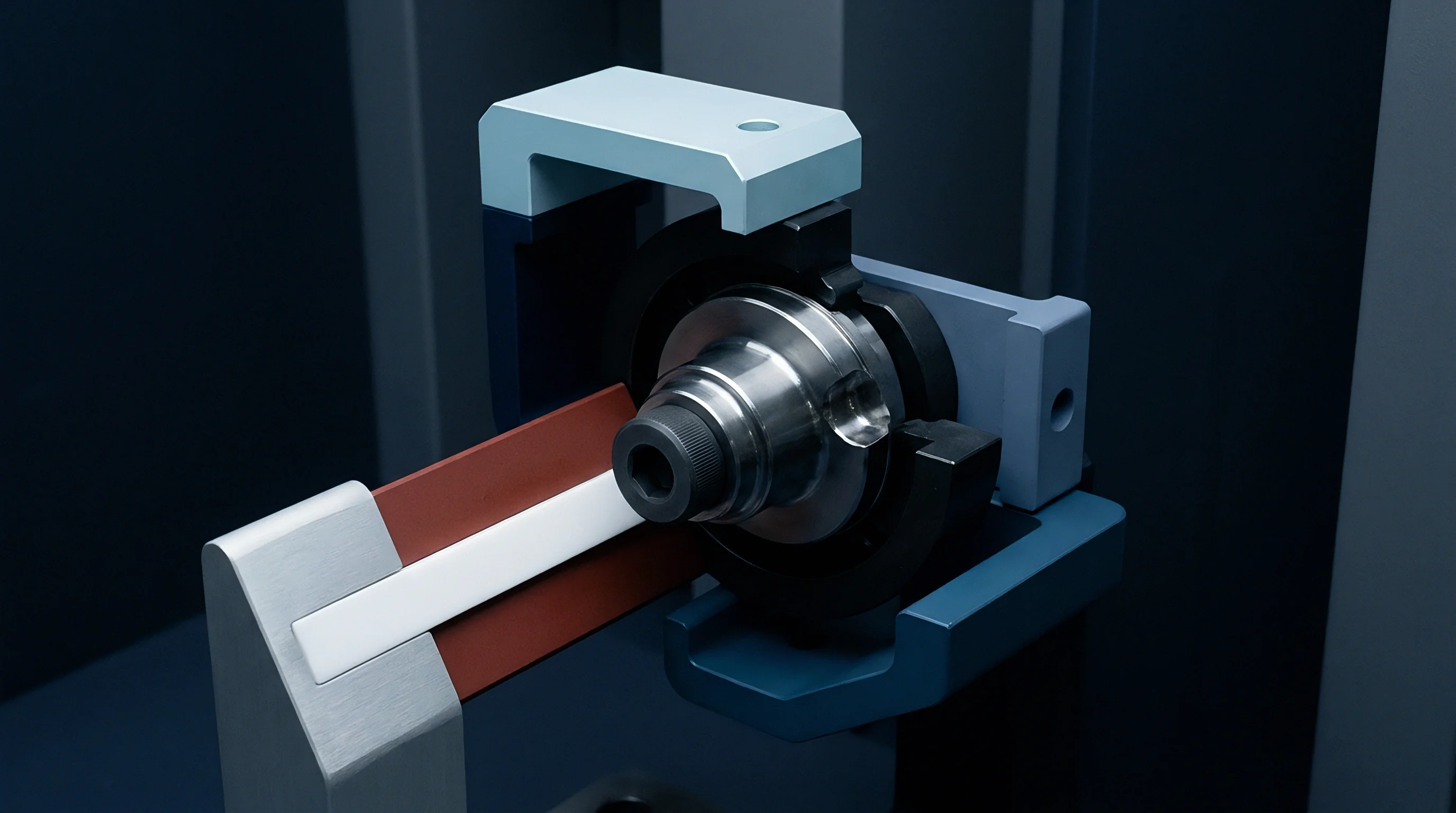
Engraved metal plates bearing ownership details should be riveted or bolted directly to the mold base and ejector housing. The plates must state, in both English and the local language, that the equipment is the non-transferable property of the foreign bailor. Engineering specs should specify deep mechanical engraving on non-wearing exterior steel surfaces so the text does not rub off during long production runs.
| Property | Injection Molds | Stamping Dies | Assembly Fixtures |
|---|---|---|---|
| Base Material | 316 Stainless Steel (1.5mm thickness) | Anodized Aluminum / Stainless Steel | Engraved Brass or Stainless Steel |
| Attachment Method | Deep blind-hole rivets or flush hex bolts | Welded tab or recessed screw mounts | Riveted plate or direct laser etching |
| Required Marking Depth | Minimum 0.3mm mechanical depth | Minimum 0.5mm mechanical depth | Laser etch depth 0.15mm minimum |
| Data Fields Included | Owner Name, Serial No, Asset ID, Patent No | Owner Name, Die Number, Max Tonnage | Owner Name, Part Number, Station ID |
Electronic tags can back up physical plates by embedding digital identifiers directly into the tooling. RFID transponders sealed in heat-resistant resin fit into machined recesses in the mold frame, holding encrypted ownership records and maintenance histories that auditors can read with handheld scanners.

Audit Verification Protocols on Active Factory Floors
Regular physical audits confirm that tooling stays where it belongs and that legal tags remain intact. Unannounced visits check that local teams have not removed, covered, or swapped ownership plates during maintenance. Auditors record serial numbers, photograph asset tags, and reconcile physical plant locations with regional legal filings.
Factory managers often explain missing tags with the same excuse: “The identification plate fell off during high-temperature thermal cycling and sits inside the maintenance drawer awaiting re-attachment.”

Insolvency
When a tier-one supplier goes into bankruptcy, local bailiffs treat unencumbered machinery on site as part of the liquidation estate. Insolvency proceedings automatically freeze plant assets and suspend standard contract rights. Tool owners who failed to perfect their bailment rights before the filing lose physical control and end up in lengthy court fights to get their property back.
Insolvency courts require clear, pre-existing records.
Claims pile up fast from secured lenders, unpaid workers, tax authorities, and landlords. Landlords routinely assert distress liens over all equipment on the leased premises to cover overdue rent, regardless of who actually owns the machinery.

Can a Host Country Landlord Seize Foreign Molds?
Commercial landlords regularly seize equipment on defaulted property using statutory lien rights. Civil codes in many manufacturing hubs grant landlords priority liens over all personal property on the premises to cover unpaid rent. Defeating a landlord seizure takes registered bailment records and marked assets that clearly predate the lease default.
A statutory landlord lien automatically attaches to all unflagged equipment on leased premises unless a perfected bailment filing notice was registered prior to lease default.

Repossession Mechanics and Emergency Injunctive Orders
Recovering tooling from an insolvent plant requires filing immediately for emergency injunctive relief in local courts. Petitioners have to show clear legal title, an immediate threat of loss or irreparable commercial harm, and a perfected public registration. The court can then issue a writ of possession instructing bailiffs to enter the facility, oversee extraction, and hand custody back to the owner.
Automatic bankruptcy stays instantly freeze factory assets.
If tooling is not recovered before a liquidation sale, courts will auction the equipment off, leaving the original owner with nothing more than an unsecured claim against an insolvent company.
Common vulnerabilities that surface during vendor insolvencies include:
- Unregistered Asset Custody where tooling resides on factory grounds under informal purchase orders without public security registry filings.
- Inadequate Physical Tagging allowing court-appointed liquidators to classify unmarked foreign molds as debtor property during initial asset inventorying.
- Landlord Statutory Attachment occurring when real estate owners assert distress liens over leased premises to cover accrued commercial rent arrears.
- Secured Lender Blanket Charges where commercial bank loan agreements create fixed and floating charges over all equipment present on vendor grounds.
Poorly drafted protection documents turn what should be a routine recovery effort into a total loss of specialized tooling.


Arbitration
Cross-border dispute mechanisms determine whether a recovery order can actually be enforced in a foreign jurisdiction. Relying on home-country court rulings is risky, because many manufacturing nations refuse to recognize foreign judgments involving local personal property. Winning a court case overseas often leaves an asset owner holding an unenforceable judgment.
Arbitral awards still require local court recognition to be enforced.
Including international arbitration clauses in contracts provides enforceable cross-border recovery rights through global treaty networks. Selecting the right arbitral seat and invoking local interim preservation rules ensures that arbitral orders can actually be executed on the factory floor.

Enforcement Treaties and Emergency Interim Relief
The Convention on the Recognition and Enforcement of Foreign Arbitral Awards (New York Convention) allows arbitral decisions to be enforced across more than 170 contracting states. Tribunals can issue emergency preliminary orders directing suppliers to hand over tooling, stop using machinery, or permit a transfer to neutral custody. Courts in member states then execute these emergency orders through local enforcement mechanisms.
Arbitral emergency measures governing physical asset repossession are enforceable in host country courts under the New York Convention when paired with local court interim relief filings.

Jurisdictional Selection and Enforcement Realities
Choosing an arbitral institution requires evaluating local enforcement speeds and administrative handling. Institutions like the Hong Kong International Arbitration Centre (HKIAC), Singapore International Arbitration Centre (SIAC), and China International Economic and Trade Arbitration Commission (CIETAC) maintain specific rules for appointing emergency arbitrators and issuing interim asset preservation orders.
- Submit emergency arbitral application requesting immediate injunctive asset preservation and repossession orders.
- File simultaneous application in host jurisdiction courts for provisional equipment attachment under local arbitration support statutes.
- Obtain emergency arbitral order establishing immediate foreign bailor custody rights over listed tooling assets.
- Present emergency arbitral ruling to local execution courts for immediate issuance of judicial repossession writs.
- Accompany court bailiffs to the manufacturing site with riggers and transport carriers to execute physical asset extraction.
Whether local enforcement courts will grant ex parte search and seizure orders before a supplier gets formal notice of arbitration depends on local judicial precedent and police cooperation.


Salvage
Replacing a complex high-cavity tool takes four to eight months and can burn through a hardware company’s remaining cash. Re-tooling costs go far beyond cutting raw steel ~ they absorb capital across redesigns, sampling runs, quality checks, and customer re-qualification. Total losses from lost tooling routinely outstrip the original purchase price of the machinery several times over.
Extended production downtime quickly drains cash reserves.
Calculating the true cost of asset loss means accounting for both direct replacement fees and the cash burned while production stands still. Spending upfront on legal perfection, registration, and asset tags costs a tiny fraction of what a single tooling loss event drains in idle operations.
Financial Metrics of Mold Replacement and Downtime Burn
Measuring total risk exposure means balancing capital costs against ongoing operational expenses during an extended shutdown. Take a high-cavity automotive mold worth $350,000 running at a tier-one plant. If a sudden vendor bankruptcy locks up the facility, component deliveries halt for a product line bringing in $200,000 a week in gross revenue.
Losing a tool halts the entire assembly line.
Building a replacement mold takes 22 weeks, counting design work, steel cutting, trials, and final dimensional checks. Across that 22-week shutdown, fixed overhead, contract penalties, emergency air freight, and customer churn add up to $45,000 per week. That brings total downtime burn to $990,000 ~ which, combined with the $350,000 for the new tool, pushes total exposure to $1,340,000.
| Cost Component | Proactive Protection Model | Asset Loss and Re-Tooling Model |
|---|---|---|
| Bailment Drafting and Notarization | $3,500 | $0 |
| Public Registry Perfection Filings | $1,200 | $0 |
| Physical Identification Tagging | $800 | $0 |
| Emergency Litigation & Recovery | $0 | $85,000 |
| Replacement Tool Fabrication | $0 | $350,000 |
| 22-Week Production Downtime Burn | $0 | $990,000 |
| Total Financial Impact | $5,500 | $1,425,000 |

Insurance Allocation and Total Asset Loss Calculations
Commercial property policies rarely cover foreign tooling held by third-party suppliers without explicit endorsements. Standard coverage stays limited to equipment on listed corporate premises, excluding tools housed at overseas plants. Off-premises floaters and contingent business interruption riders are needed to cover theft, physical damage, or political seizure.
Production delays compound unit costs over time.
Customs documentation confirms legal entry of the asset.
Investing upfront in legal perfection, physical tagging, and regulatory registration protects hardware companies from operational collapse when suppliers default. Implementing full bailment protections across multiple countries costs less than one percent of the downtime burn triggered by asset seizure and emergency mold fabrication.